Wirral-based Hype works predominantly with people under 24, giving them the skills to get into employment. Its key objectives are to create more opportunities for young people; support young people to reach their potential and in doing so to strengthen local communities. It has developed a number of products and projects to support young people, moving to an increasingly sustainable business model as it grows.
Hype began in 2007, with chief executive Matt Houghton and his two co-directors combining their shared interests in football and music to run holiday activities and clubs for young people in deprived wards across Wirral.

Hype Merseyside chief executive Matt Houghton
“I used to go to youth clubs at that age and was inspired by youth workers,” says Matt. “Some of my circle are in prison now, and others have had problems with drugs – but I always had football to keep me away at times from the other things that were going on.”
Matt and co-directors Dave (a PE teacher and coach) and Sean, a DJ and club night promoter, began Hype with a £10k grant from Expanding Horizons. It set them on their way, delivering workshops for free during school holidays in Rock Ferry, Seacombe and Woodchurch. As its work with young people expanded, the team was asked to run evening sports sessions in local schools: Gino, one of the first young people Hype worked with, became a volunteer at their next holiday workshop. He went into coaching, volunteering, youth work and became a paid member of Hype staff, before going into teaching. He’s now a deputy head of a year at a local school and testament to the transformational nature of Hype’s work.

Seeing widespread demand, the Hype team focused its activity to key areas: Bidston, Central Birkenhead, Rock Ferry and Woodchurch. A strong geographical correlation led it to partner with Magenta Housing to work within its communities, taking on work with the younger siblings of its traditional clients and their parents, if they were out of work.
Matt admits that gaining the trust of local communities that has proved a catalyst for Hype’s work. It used community centres as a base for youth clubs, employability and holiday clubs, before adding work with schools and dance, health and wellbeing, football, art to its roster of activities, alongside work with young people with behavioural issues, vulnerable groups and hard to reach groups.
In 2020, as schools provision, youth clubs and holiday clubs stopped with lockdown, its bike projects – from guided bike rides to maintenance and bike leaders – have snowballed. By far Hype’s biggest growth area has been in its social bike shop. The community shop opened in June 2019 in the centre of Birkenhead, designed to help more people get out and about on bikes. Yet the coronavirus pandemic saw a renewed focus on cycling, aligning the project with government plans to encourage more environmentally friendly forms of transport.
With 120 bikes on its books that were due to be used for group rides, Hype turned its attention to donating them to key workers at Wirral and Liverpool hospitals, to get to and from work more safely. Demand for bikes to borrow rocketed, alongside hundreds of donations, and the maintenance needed to get bikes roadworthy and serviced.

A new unit near Cammell Laird now houses around 200 bikes, and Hype’s bike mechanics shop, running programmes aimed at employability, linked to the bikes. Repairs and hire brings in an income for the shop as Hype moves towards a socially-trading model, whilst providing training for the young adults it works with.
Hype has made a success of working with young staff under 24, that leave the organisation not only more qualified and experienced, but with a good understanding of social enterprise and how it works.
Extending that practical ethos to its work, in 2015 Hype began redeveloping shops and buildings with its young volunteers, in order to deliver more activities in them. 2015 also saw it take on a series of garden tidy-ups, which led to the identification of a fenced half acre plot of land in Birkenhead Park in 2016. Running its own fundraising campaign, the team transformed the space within 18 months into a vibrant park, with planting, an outdoor classroom, nature trail, safe play area – with young people involved in its design throughout. As an event space, it has become a focal point for increased participation and the perfect environment for its wellbeing programme.
Hype’s work in Birkenhead Park led to similar work across other areas of Liverpool City Region. As a football coach, Matt had delivered coaching projects in South Africa for a number of years, and pulled together a project to link his young volunteers in LCR with sports coaching and teaching in Cape Town’s Greenpoint Park in South Africa (2018) and New York’s Central Park (which has historic links to Birkenhead Park) in 2019. Working in school, parks and communities gives Hype’s young people a variety of life skills alongside their work experience, exposing them to new cultures, broadening their horizons and boosting their confidence.
Although in 2020 many park initiatives stopped, in February last year Hype delivered its first European Park project as part of the Erasmus programme, with 24 young people from Portugal, Italy and Greece, plus volunteers from LCR observing and developing activity in the city region’s parks. Now, they’ve taken that learning home and will be encouraging people to engage more in parks in their home countries, and have secured a repeat of the project for 2021.

As a result of the growth of its bike programme, Hype saw its turnover double in 2020, although it only managed to work with a tenth of its usual number of people (600, compared to 6,000 the year before). It is now using investment from Kindred to continue to develop trading income and oversee projects in communities centres, schools and parks, prioritising those which will ensure the STO’s sustainability and increase the impact of its work.
Hype has just recruited its first cycle development officer to make the most of demand for its bike service and its Full Circle bike project will see projects run for every age group, developing skills around balance and employability, and combating anti-social behaviour.
For more information about Hype, head to its website, hype-merseyside.co.uk, or for its bike project, have a look at www.hypeurbanbikes.co.uk.
Beautiful New Beginnings bridges the gap between parents, schools and services. The North Liverpool-based early years organisation has grown hugely during the pandemic, supporting thousands of parents to become the primary educators in their child’s life from birth and bridging the gap between parent and professional, from pregnancy to school age.

As face-to-face support for both antenatal and post-natal services disappeared, Beautiful New Beginnings moved its business online, and has now pioneered a blended model, supporting parents across the globe. “There has been a huge need for people to feel connected,” says founder Carolyn Whitehead.
It has created a genuinely accessible place to support isolated parents, adding online membership packages, sensory bags and boxes, a baby massage oils range alongside the Seasons programme, which dovetails with the new mental health curriculum launching in schools.
“Working with the Kindred team has been a breath of fresh air,” says Carolyn. “To be surrounded by a community of people determined to grow and scale the impact of the good works they are doing is invaluable. We are so excited to be part of the first round of investments made by Kindred and cannot wait to impact more families in our area.”
The Beautiful New Beginnings team includes a number of professionals, from qualified teachers – including special educational needs – to a counsellor who delivers wellbeing sessions, a pregnancy pilates practitioner and a midwife for positive birth and labour information, plus hypnobirthing and breastfeeding support. A nutritionist and first aider advise on baby-proofing your home and baby first aid, alongside a dedicated breastfeeding worker.

Beautiful New Beginnings has expanded into a creative space online, using National Lottery funding to purchase equipment to create a platform for people to stay connected, and train parents to set up coffee mornings in cities from Leeds to Bristol and London.
Carolyn says: “There’s been huge demand for what we do. Price rises for ‘traditional’ support and reduced offers will be a real issue for many parents (and children). Many children are likely to be facing challenges with social skills and separation anxiety as parents go back to work. There are also issues surrounding speech and language because of the wearing of masks – we really feel there’s a need for 24-hour access to support out there.”
A full range of sessions includes: antenatal classes, baby first aid, breastfeeding, children coping with stress and anxiety, nutrition, pelvic floor exercises and incontinence, Pilates for pregnant women, signposting for early years, healthy minds sessions / mindfulness, sleep training, stay-and-play and baby massage, story telling, supporting parents to understand their children’s education and wellbeing sessions.

Over the next ten years it’s inevitable that cities will change drastically. We’ll no longer be able to rely on cars and public transport to travel - cycling and walking will be the new norm. Cycle of Life’s Ibe Hayter realises a radical new approach is required to tackle the social inequalities in mobility, health, emissions and socio economic status in the city/region – as well as the other barriers that prevent people from confidently choosing to cycle. As the world we live in changes, it’s vital that people aren’t left behind.
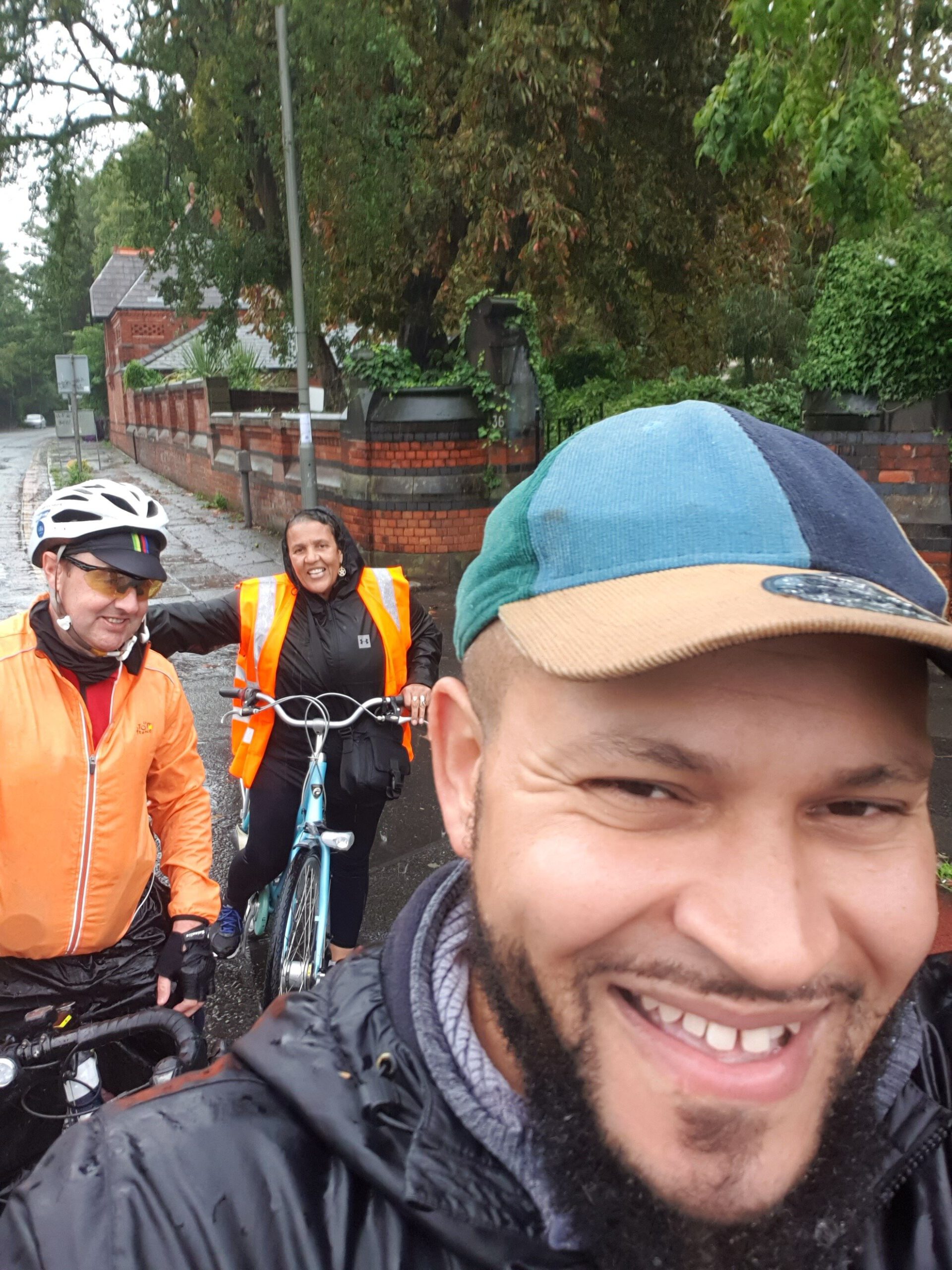
“I enjoyed cycling with my father as a child – it was all about roaming freely and going where you want to go. I tried to pass this on to my own children,” he says. “But I found that they didn’t enjoy it as much, as there wasn’t a cycling culture in my diverse neighbourhood.
“I trained up and worked as a cycle instructor, running cycling projects. I remember one of the instructors I worked alongside at a school telling a young Somali student that she would have to take her headscarf off to put on a helmet or she would not be allowed to ride. I felt she was being forced to choose between her identity and riding a bike, which was unfair.
“Many of the children we trained at schools lived in my area, although none of the instructors did,” Ibe continues. “After completing the training I noticed many children stopped riding. When I asked why, they informed me that their families did not encourage them, as they felt riding bikes on the road was dangerous. Parents listed many barriers to cycling and why they did not encourage their children.”

After completing an Active Citizen course at Kuumba Imani, Ibe decided the time was right to change the culture, removing some of those barriers. Starting in early April 2020, the Covid-19 pandemic meant that his first project was to provide bikes to NHS and key workers, enabling them to travel to work safely.
But Ibe realised a radical new approach would be required to tackle the social inequalities in mobility, health, emissions and socio economic status in the city/region and create new attitudes to active travel and alter behaviour in city life.
A year later, Cycle of Life has delivered 90 community cycle rides, 45 hours of cycle repair workshops a week, repaired over 180 bikes and provided another 50 to NHS and key workers.
Its focus is on communities that have been traditionally overlooked or less represented in cycling and it has 150 members. It’s trained twelve cycle leaders – eight of whom are female, and six from BAME backgrounds – and established new cycling groups at Unity, Asylum Link, Liverpool mosque and a women’s group at Calderstones Park. Cycle of Life’s social value added has been calculated at over £400,000 in its first year.

“Collaboration is key to effective social change,” says Ibe. “Working with the public, private and voluntary sector means we can all achieve goals with limited resources.” He’s signed agreements with organisations as diverse as Liverpool City Council and Back on Track, providing a huge variety of services. Cycle UK has trained its volunteers, providing insurance and policies for them to become cycle leaders. In turn, they’re delivering led rides to local community groups like Asylum Link, and making plans to deliver balanceability classes, start a cargo bike delivery service with a young person’s cycle sports club with British cycling. “We’re also developing a 12-week targeted social prescribing pilot with Alder Hey Children’s hospital to tackle increasing health concerns in young people. And we’re negotiating a contract with a national provider to deliver a revamped model of instruction in schools with local instructors who reflect the communities they serve – not only will they teach children to ride, but will take their parents on led rides to give them the confidence.”
Cycle of Life will start bike buses with families cycling to school and create a big change in travel choices in Liverpool. Not only does the STO aim to increase active travel in Merseyside and remove barriers to cycling, but it’ll build skills in local communities by delivering cycle maintenance workshops, a cycle repair centre and develop an instructor and mechanic training centre, creating employment opportunities for local people.

The plans also support Liverpool’s ambition to become a zero-carbon city by 2030. A cycle hub will provide a repair station, café and showers for commuters, become Liverpool City Region’s first training centre of excellence for cycle mechanics and instructors and house an Active Travel consortium. Cycle of Life has created an L8 Active Travel Forum, made up of local residents, businesses and community organisations, to amplify L8’s voice with decision makers, consult and listen closely to its community and enable the area to be chosen for larger investments such as Liveable Neighbourhoods and Low Traffic Neighbourhoods. It will also develop an effective tool to enable schools and other organisations to facilitate an effective active travel model within their communities, and help develop local ‘business on wheels’ entrepreneurs.

“I cycle for a few reasons,” says Ibe. “Keeping fit is one of them. It also relaxes my mind, whereas when I drive I feel stressed. Cycling gives me a chance to think about the wider picture. How we want our city to look in the future for our children. Now, for me, it’s about creating an inclusive culture with long term economic, environmental and health benefits. Cycling is a force for good. It creates an environment which can solve a lot of social ills.”
Wirral’s Festival of Beautiful Ideas took place in April 2017, bringing people together to share ideas for making Birkenhead a better place to live and work. Funded by Wirral MBC, the prize pool was matched by Wirral Chamber of Commerce, bringing it to £12,000. Just three years later, projects developed as a result of the festival are on course to deliver more than £3m of value in both financial and social impact.
The week-long festival included events and hack days in some of the town’s more unusual spaces and places, creating an opportunity for people to talk through ideas and share opportunities. Four key focus areas: Wirral Eats, Wirral Plays, Wirral Makes and Wirral Spaces, became a catalyst for the town’s talent.
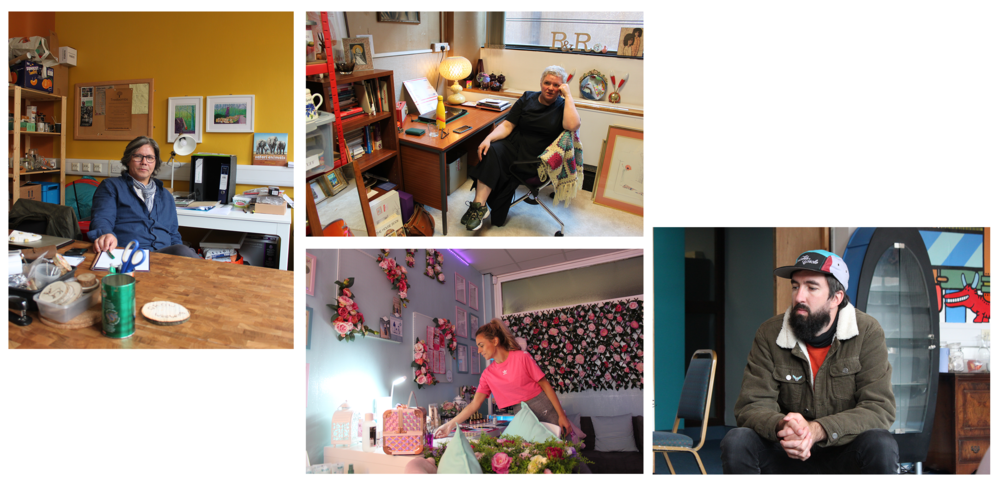
People from across the peninsula were encouraged to bring along an idea or business plan to make Wirral a better place to be. They bid for support from a funding pot of £12,000, to help take ideas to the next stage of development.
Over 60 ideas were submitted, from mobile food and drink carts to furniture prototypes, yoga, mindfulness, and music and making venues. Five individuals received funding in the culmination of the week’s events and three new Wirral-based collectives emerged, including the Wirral New Music Collective and the Wirral Wellbeing group.

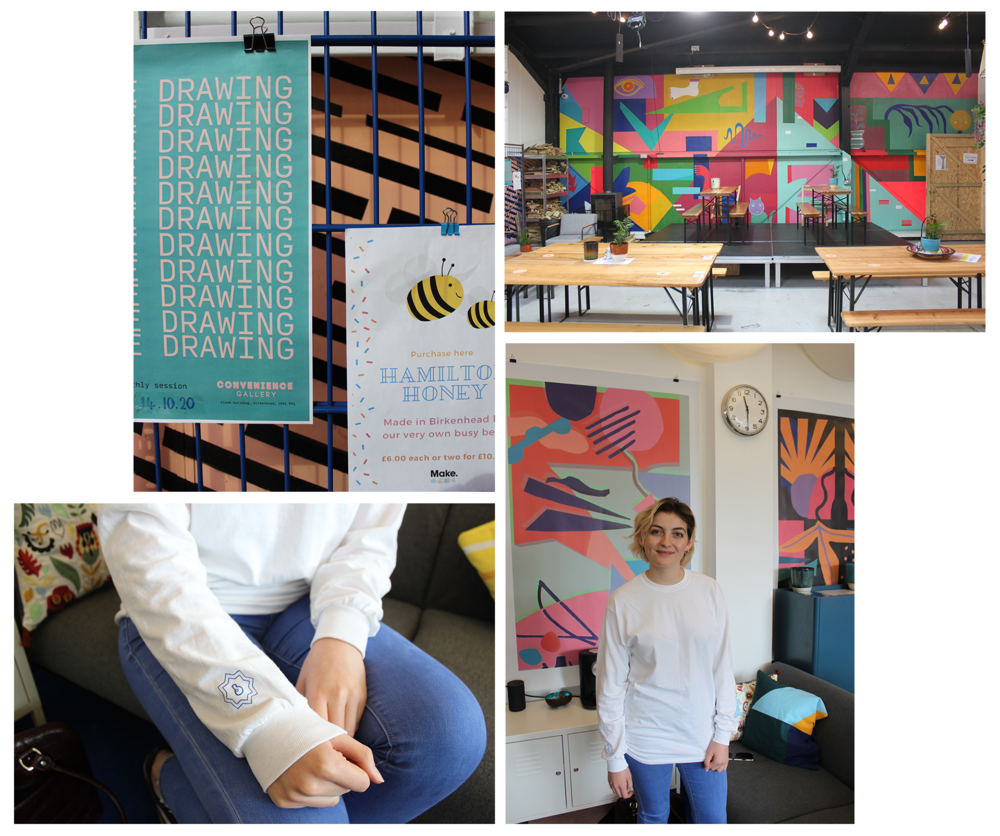
Three and a half years later, Future Yard, the product of Wirral New Music Collective’s vision, has just opened. The event also provided the evidence for Wirral Council and Make CIC to work together to open Make Hamilton Square, now 18 months into existence in the council’s former Treasury Building. Make has received an additional £59,000 investment to launch the site from a variety of investors, and a number of the festival’s participants are also now residents in this new creative community hub, which has become a focal point for socially-trading organisations.
A group of STOs, including Grow-Wellbeing CIC, Blossom Haus, which provides mental health services for people under 18 and Pathways to Work are now resident at Make Hamilton. Hilary White Designs, an artist who participated the Festival of Ideas, is artist in residence.
Cllr. Christine Spriggs was Cabinet Member for Culture, Heritage and Creative Economy at Wirral Council between 2017 and September 2020. She worked with Wirral Council officers who commissioned the Beautiful Ideas Company to deliver the festival, and says: “What’s happening in Birkenhead right now is pretty exciting as a new, confident, creative community emerges. There has always been so much creative and artistic talent here on the Wirral, but this has been galvanised by initiatives such as the Wirral Festival of Beautiful Ideas and what has emerged since… The transformational potential of cultural and creative activity in Birkenhead has been driven by this grass roots movement of creative entrepreneurs. It has only really just begun.”
Post-festival, five music events across five different venues proved the music collective’s concept. They resulted in Birkenhead’s first music festival at Birkenhead Priory, which created a financial impact of £282,191. After 97% of visitors expressed a wish to attend more events like the festival, it opened Future Yard – the first live music venue that Birkenhead has had for years – in the middle of 2020. Not only will it support live music in the town, but industry skills and artistic development, with industry-led training pathways for local young people, a 350 capacity live venue, music studios, co-working space and café/bar.
“We have a blissfully optimistic idea that you can change a place through music – through enabling and encouraging music communities,” says Future Yard’s Craig Pennington. “Venues are often the places where those things start and it’s musicians that colonise and start those processes. But it’s not just short-term gentrification – our aim is to enable a long-term shift from the bottom, up. The venue is our platform, with performance as its core.”
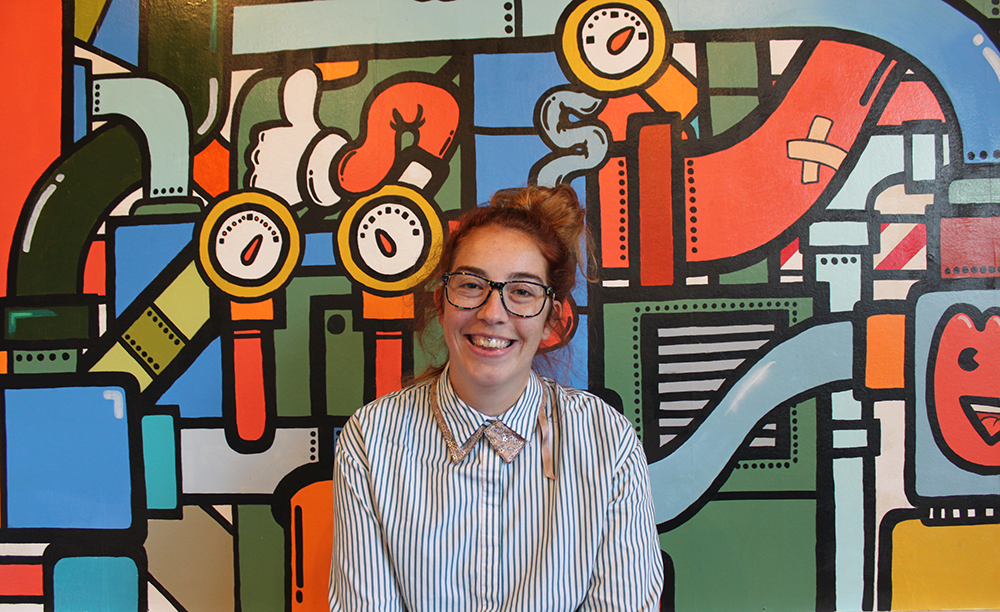
Liam Kelly is the CEO of Make, and a Commissioner for Town Centres on behalf of Liverpool City Region. “The bubbling of creative activity in Birkenhead is starting to move from a slow simmer to a roaring boil – in spite of a global pandemic,” he says. “Make Hamilton is close to being completely full, which far exceeds forecasts and expectations. Alongside other brilliant projects like Future Yard, Convenience Gallery and others, it’s living proof that both demand and desire exist in Birkenhead, and that we're ready to take brave next steps in its renaissance.”
The financial impact of the town’s cultural renaissance* can be estimated at around £2,290,000 this year, rising to a potential £2,790,000 next year as Future Yard opens up and welcomes tenants.
Its equivalent social impact, based on studies of similar place-based social, maker and creator activity within a locality, shows that Birkenhead is estimated to deliver at least £916,000 of social value every year, bringing the total delivered as a result of the Festival of Ideas intervention to date at £3,206,000 (rising to £3,906,000 in 2021).

Collaboration lies at the heart of the approach. It was embedded in the Festival of Ideas, and has continued amongst the STOs that benefited from it. Future Yard, Make Hamilton and Bloom are now embarking on their own cultural triangle, creating a cultural shift to opportunities and perceptions in Birkenhead.
* These figures are derived from those ventures that resulted from or were inspired by the Festival of Ideas, that have been tracked. Not all ventures were tracked as no follow-up resource was supplied. Some of the key ventures have continued to rely on Beautiful Ideas Co and Creative Economist for support, at an in-kind cost circa £30,000 per annum. Average turnover figures have been applied to tenants of key ventures in line with national micro and creative business turnover and available Companies House information. Social impact has been estimated using detailed studies of similar interventions and creative, maker and social activities at 40% of financial impact.
dot-art Services CIC supports emerging and established visual artists across the region by helping them develop their careers and gain exposure and promotion for their work. dot-art also delivers a programme of public-access art classes across Liverpool alongside the dot-art Schools programme, an inter-school art competition, which launched in 2012.
dot-art’s work recognises the contribution that art and culture make to our wider community and wellbeing. As well as supporting visual artists and helping them make a living from their work, whatever their background, its goal is to enable everyone to enrich their lives through art. Working with around 100 member artists at any one time, dot-art develops and generates a wide range of projects for them to work on, from producing bespoke artwork for the interior of the Liver Building or delivering workshops in schools, to taking part in exhibitions. Member artists deliver around 4,000 participation hours every year, teaching everything from landscape painting to analogue photography to the public.
Member David Andrews ran sessions in 25 schools around the Anfield area. His project culminated in a community art work for Liverpool Football Club, alongside regularly delivering his popular one-day street art workshops.

“I really enjoy the variety of projects I get to work on through dot-art and the big name clients that I wouldn’t usually have access to if it wasn’t for their representation,” he says. “The LFC project is the largest one in my portfolio and I loved working with 500 children across North Liverpool, as well as staff from the club, to create this mural at Anfield.
 “Being a member of dot-art has helped push my boundaries and comfort zones of being an artist to build my confidence, experience and portfolio. In the last five years of being a member, I have also had the chance to work with young people in foster care and pupil referral units, as well as creating murals for Alder Hey Children’s Hospital, the 50th Anniversary of Sgt Pepper’s and two office blocks.”
Between 2012 and 2019 dot-art Schools worked with 398 schools, and 6781 students, across the North West. Notable outcomes from the programme include creating cultural participation that crosses geographic and demographic boundaries, raising pupils’ aspirations and building self-esteem.
Alongside being a regular contributor to Kindred Conversations, the dot-art team has been working with Kindred to better articulate its social impact as an organisation, and has been working on new bids to help take its work with schools national, with support from Kindred.

“Kindred is a really refreshing new approach to support for our sector,” says managing director Lucy Byrne. “Since we first engaged with Jo and Erika at the beginning of lockdown, both through one-to-one support and online events, I’ve felt that they’re genuinely here to help us and have the knowledge, experience and contacts to back it up. We are all experiencing tough times, but it really helps to know there is someone you can call on for practical help and realistic suggestions.”
“During the pandemic, families have been thrown together in an unprecedented way, unable to see friends, to visit the places they love, or even to go to school, college and work,” says Baytree Catering founder Michelle O’Dwyer. During lockdown, the Baytree team created fun, interactive cookery sessions, designed for them to learn, work together and share great food.
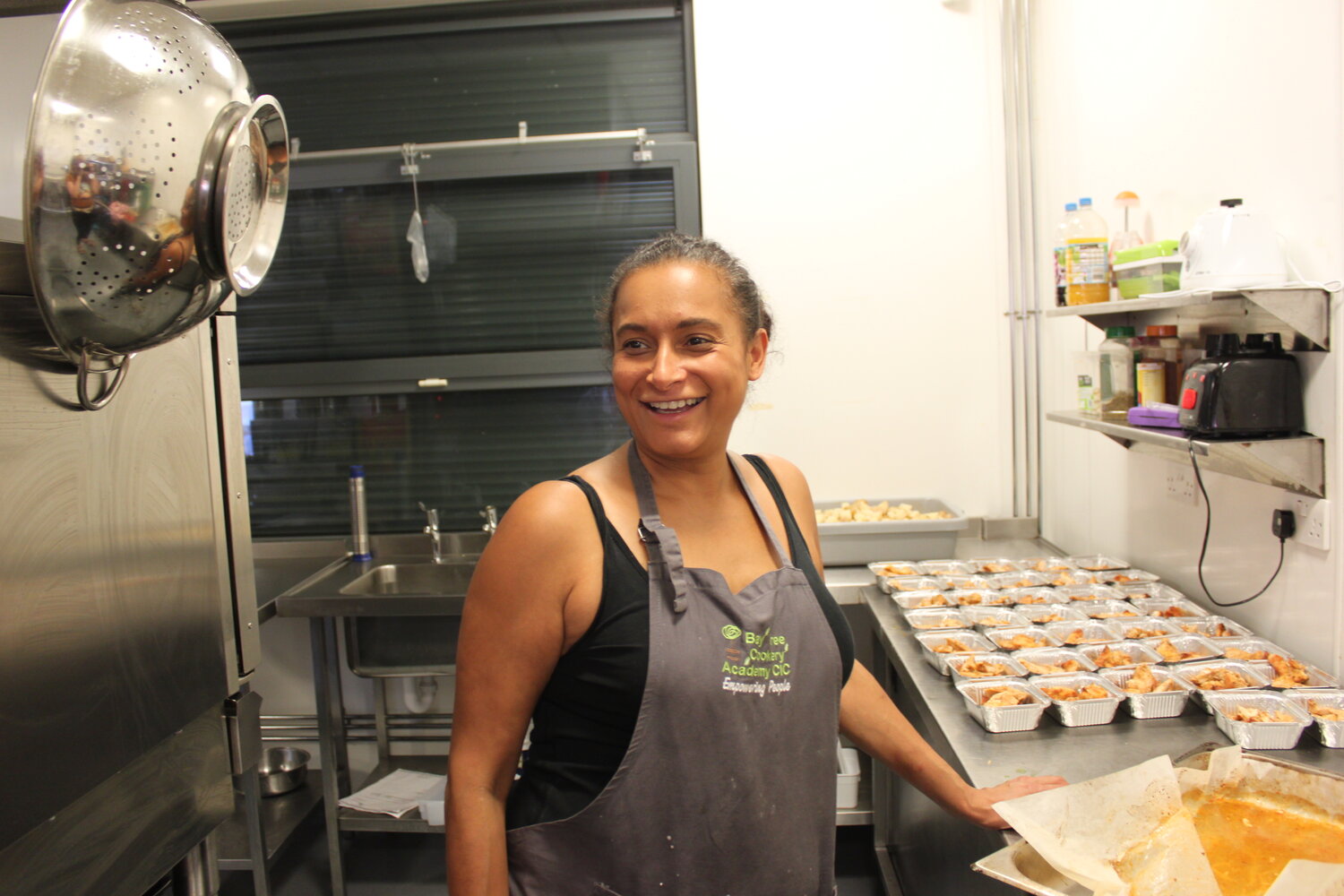
Baytree has plenty of experience cooking in the community. Every year it cooks a Christmas dinner – in 2019 it served 170 people, bringing people from across the city region for dinner. In 2020, it’s worked alongside community volunteers, drivers and community centre’s, including the Joseph Lappin Centre in Old Swan, Granby Children’s Centre, Unity Youth Children’s Centre, The Florrie and The Caribbean Centre. During lockdown it has provided 1,860 food kits, containing 7,440 servings of fresh, nutritious food to families in the L8 and L13 areas of Liverpool.
Debi McAndrew, the children’s centre co-ordinator for Liverpool City Council, says: “In terms of real benefits to families, we can confidently report that children and their parents have reported improved relationships by sharing cooking activities; parents are more aware of healthy eating and how this can be; children are making healthy choices and families are engaging in adult/ child activities which promote and help to develop positive relationships.”
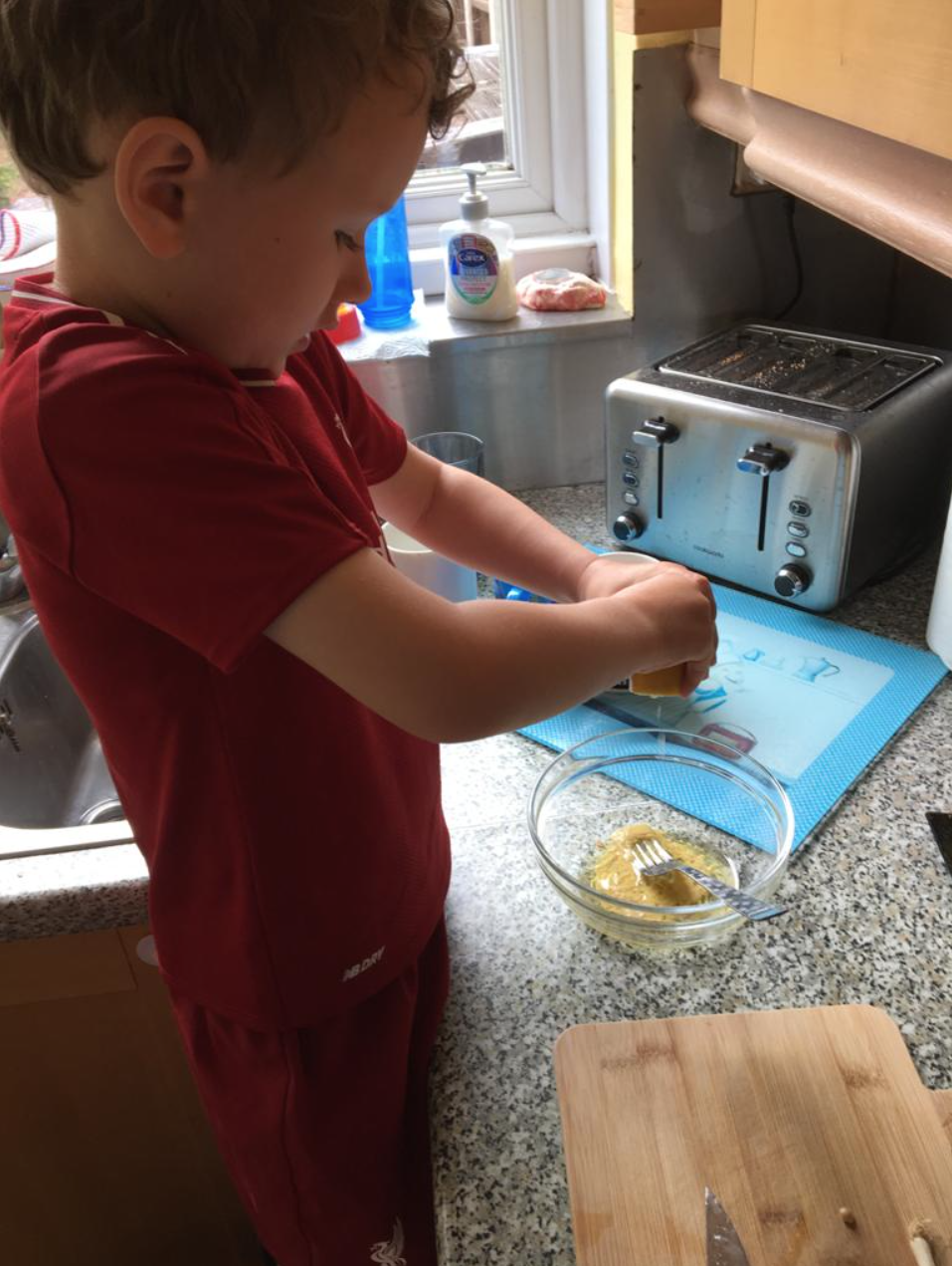
Amongst its many benefits, the programme helped build confidence in cooking skills and food choices. It created intergenerational activities, supported community members who were shielding, alleviated food poverty through the provision of meals and ingredients, and reduced food waste by providing recipes which re-use ingredients.
The recipe kits are made each week on Monday to Wednesday mornings and include hummus and crudites with vegetables and pitta, pizza and coleslaw, chickpea and lentil soup and chocolate chip cookies.
“The recipes have been easy to follow and parents have commented how easy it was to cook from scratch,” says Debi.
“They also report that children are ‘less fussy’ in eating different foods, as they have made it themselves. Overall, this has been a great success. Families have posted their cooking skills on social media and – as a result of sharing via social media – we’ve had messages sent to us from those who haven’t received a recipe bag asking if they can become involved.”
Baytree Catering works with a number of volunteers from marginalised communities to deliver its services, supporting them to begin working within the communities that they serve and helping them into education and work.

“I wouldn’t be the person I am today if I hadn’t come here. Without Julie and Michelle I’d have been lost,” says Anne-Marie, one of Baytree’s team.
Michelle attended a Kindred event and has since received support to help her rethink what growth might look like for the business. She’s been learning about social impact and has linked Baytree Catering up with other socially-trading businesses to collaborate and reach new customers.
ESOL teacher Debra Hill had a better idea for supporting her students to learn English, helping them move from basic questions to meaningful conversations with her fellow residents in St Helens.
 Debra was working with refugees – mainly from Syria and Iraq – at a St Helens-based adult learning provider. “The learners I was working with are so nice – they’re really lovely families. But there was so much bureaucracy around helping them integrate and it was almost impossible to help asylum seekers. I was teaching sessions for vulnerable adults, but prioritising learning English was often a struggle: some couldn’t read or write in their own language; some could be moved on with no advance notice and for others, when you’re living on £5 a day, a bus pass that costs £4.60 isn’t always high priority.
“Then, once they’ve had their asylum claim heard, and are given refugee status, they have 28 days to find somewhere to live, get a National Insurance number and find a job. I had to find some way of bridging that gap, and helping them develop employability skills.”
Having worked through a few ideas to support her learners, Debra settled on the idea of a café, to help them develop customer service and employability skills, and use their hospitality and cooking skills to build their confidence. Café Laziz opened in September 2019 and in 22 weeks, has served 620 paying customers, providing 51 children and 82 asylum seekers with free meals.
“It was a question of looking at the skills we already had,” she says, “and how can we use them in this country.”
Taking on the café at a local children’s centre, she worked with learners to develop their customer service skills, and opened one afternoon a week, serving food for the local community. It also has a pay-it-forward mechanism to allow people to pay for someone else’s food, and children eat for free.

“Until recently, St Helens’ population was 97% white British. With refugees arriving in the town, I was concerned that they were being spread around different places, with no focal point to support them,” says Debra.
She worked with her team of volunteers on the design for the café’s logo, which saw it named Café Laziz – in English, the name translates to ‘delicious’. They voted on the design, did some work on their customer service skills, and opened.
“At first, I really struggled to get volunteers to be the cashier and talk to customers about their food,” she says. “But in no time at all their confidence really grew and they’re happy to chat and talk about themselves and their experiences.” Hearing those stories resonated with local residents: “I knew we were on to something when people stopped buying the jacket potatoes, because they were eating Arabic food instead,” she smiles.
There are also cultural differences to overcome. The first time the café opened, the women brought their children to work; now the dads look after the children while the women are working. But the dads have had a taste of life in the kitchen too – they made and served food for their wives and children at the Christmas party.
Debra has been working with the Kindred team since April this year, when we first went into lockdown. ”I’m so grateful to have found Kindred – they have been so helpful and supportive without even being asked,” she says. “They engage with and listen to socially-trading organisations through their ‘conversation’ sessions and work out ways to best help. The workshops offer really useful practical solutions to help socially-trading organisations improve their practices. We’re so lucky within Liverpool City Region to have access to such a great support network – all socially-trading organisations should take advantage of it.”
Debra’s aim is to get her volunteers – who often have low levels of spoken English – to gain more qualifications; they’ve all now achieved Level 2 allergen awareness and food safety certificates, and are working on a customer service City and Guilds qualification. Longer term, she plans to take on a venue where they can meet and train them up as managers, so that the café has more flexibility around its opening hours. “I want them to have something they can take ownership of,” she says.

One of the café’s first volunteers has already found full-time paid work in the food industry, and nine volunteers are engaged currently. One volunteer delivered an impromptu speech at a council grant launch event, whilst another has delivered Arabic drinks and snacks at a regional ESOL conference.
“For some of these women, it’s their dream,” says Debra. “Their education was disrupted in Syria or Iraq before the war, and they’ve had a lot of time since just waiting in Lebanon or Jordan, sometimes in refugee camps. Not having those skills or experience takes a hit on their confidence. This is a direct way we can change that.”
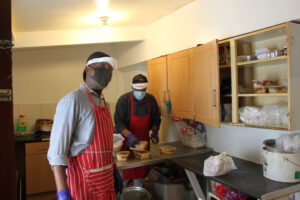
Merseyside Somali Community and Association (MSCA) has been distributing fresh, hot meals to around 100 people every week during lockdown, from its kitchens on Granby Street.
Meals are delivered to the elderly, disabled and those who can’t cook for themselves within the local community, focusing on those without other support. They’re delivered alongside a socially-distanced chat, and play an essential part in making sure community members don’t become isolated, particularly when visiting people who can’t leave their homes because they’re at risk, or have a disability.
These conversations have become a crucial lifeline for community members. While many – but not all recipients – are from the Somali community, a number of languages are spoken and some speak very little English. For the team it’s an opportunity to ask what else might be needed, from a pint of milk, clarification of the latest guidelines, ordering medication or contacting family.
Saeed Ibrahim is a former housing officer who’s part of the team. He’s “never seen such an inspiring project,” he says. “It feels especially important to get and run the service when they don’t speak English.”
Referrals from housing associations and shelters for elderly people have formed the core of the service, with a combination of funding from the Steve Morgan Foundation, Martin Lewis Foundation, Liverpool City Region CA and Princes Park Council Fund support its growth. “MSCA received and managed the grants, but we have a partnership for delivery with Liverpool Somali Community Centre,” says Saeed.
A group of seafarers set up Liverpool’s Somali community centre in 1978, seeing a growth in community numbers in the 1980s, when war broke out in Somalia. It’s evolved from being a focal point for the community and somewhere to meet – in pre-mobile phone times – to an established organisation providing subsidised Somali and Yemeni food for the local community, with a strong social aspect.
The centre also provide educational activities, employability advice and immigration support in partnership with Liverpool Law Clinic. The centre’s youth service provides additional community support, alongside NHS, Mersey Care and mental health services and awareness sessions on giving up smoking, cancer awareness, diabetes, autism, ADHD and mental health, enabling people to recognise issues and seek support.
“We have recently established a collaboration with Liverpool Somali Community Centre,” says Saeed, “delivering and preparing meals for the elderly people and people with underlying medical conditions. We have an agreement to use their kitchen space, so we can deliver the meals together in these difficult times. Our overall aim is to be self financing as an organisation and our vision for the future includes developing projects that meet the needs of people in our community such as education and training, care provision and transport.”
We need to think about music differently; as a transformative opportunity,” says Future Yard founder Craig Pennington. “There’s not a single music venue dedicated to celebrating new music in Wirral. For a place with music in its DNA, this is a saddening truth and a missed opportunity. Our town is scarred from decades of economic decay. The latest Index of Multiple Deprivation (IMD) ranked Birkenhead in the bottom 0.3% of electoral wards in England. We need to think about music differently. Birkenhead needs it.”

Its 2019 Future Yard Festival piloted the team’s plan, testing the idea with a weekend-long festival which created a financial impact of £282,191, about which 97% of visitors expressed a wish to attend more events like Future Yard. It’s now following up with a community music venue and skills hub, that will create a permanent home to realise its vision, focusing not just on live music, but industry skills and artistic development.
A new space at 75 Argyle Street in Birkenhead will become a community music venue run by the CIC, providing industry-led training pathways into the live sector for local young people. 10,000 sq ft of space will create a 350 capacity live venue, 11 music studios, a workspace and café/bar.
For Birkenhead, it’s an opportunity to showcase internationally-significant artists, diversify the town’s night-time economy, create sustainable, high quality careers for local people and incubate and accelerate new music industry start-ups.
For young people in the area, its training programmes are accredited with Arts Award (Ofqual, Trinity College); an apprenticeships and FE offer is being developed with partners and undergraduate and post-graduate placements with the University of Liverpool will begin in January 2021.
Kindred has supported the Future Yard team with several successful funding applications and continues to champion the opening of the new venue. Future Yard is fast-becoming hugely important to the Wirral’s eco-system and the renaissance in and around Birkenhead and Hamilton Square.
Homegrown Collective is a social business established in 2019, by a group of Liverpool women brewers and horticulturalists. They began by growing hops on community green spaces and in neighbours’ gardens and yards in North Liverpool, bringing people together to harvest and brew. Now they’re looking to develop a collective of community-owned training microbreweries in North Liverpool.
Homegrown Collective was launched with support from Power to Change and its Bright Ideas programme and is now part of the Power to Change-backed School for Social Entrepreneurs Scale-Up programme.

Homegrown Collective will launch its first community brewery – the Homegrown Regents Street Brewery – within Make’s North Dock building in October 2020. This ‘nano brewery’ will help it develop innovative models of localised manufacturing, creating a financially-viable business that sells beer locally, nationally and internationally – and will also pilot a sensory technology to measure its carbon impact. A second and larger-scale brewery will be launched at the end of 2021 in Anfield. This ‘Anfield’s Homegrown Brewery’ is part of the Homebaked Community Land Trust’s Oakfield Road development.
Homegrown Collective’s ‘beers with benefits’ programme helps support women in their neighbourhoods to become ‘brewsters’ (female brewers) by creating jobs in the male- dominated brewing industry. It supports them into the industry via training , mentoring and creating safe online social spaces for women to learn, share and experience beer. It trains local unemployed residents in horticulture and brewing to support them back to work and tackles endemic isolation within their communities, by running growers and brewers clubs to bring together horticulturalists and home brewers.

“Kindred has amazed me; when the chips were down they stepped up.” Says co-founder, Sam Jones. “We all have our pandemic stories, but my own is that when my father was seriously ill, Nic from Kindred worked with me late into many nights (and even over her weekend) to help me pull together a critical funding bid for the business.
“Kindred having our back spurred me and our local directors on. With a local connection via Kindred, we’re now supplying our first beer in Anfield and North Liverpool in partnership with Bernie Mays (Glebe Hotel) – and we’re about to launch our nano brewery, online shop and virtual learning programme.”
