
For building-based STOs, not having a building to call home can make costs unsustainable. MELT, a performing arts academy that has trained dancers in Liverpool – and Wrexham, Kendall and Preston – for eight years, found that out the hard way.

For years, MELT – and founder Karl Newsam – delivered from rented spaces, getting to the stage where, the more successful the academy proved, the more unsustainable costs became. Even short bursts of work were expensive, “lining other people's pockets,” he says. By contrast, he estimates a purpose-built space the same size as his new Birkenhead home would cost around £6,000 a month: well beyond reach for a socially-trading organisation that earns its way through delivering programmes, rather than through grants or reserves.
Finding anywhere at all, let alone anywhere affordable, took the best part of a year of legwork. “I literally walked up and down the street for about three weeks,” he recalls. “I sat in Wetherspoons clocking who was where, Googling, emailing and knocking on doors.” Much of what made it hard wasn't the money – it was trust.
Mentioning dance or musical theatre shut some conversations down outright – a legacy of past ‘rogue’ operators, who folded owing people money. Commercial landlords also want six years of trading accounts before they’ll grant a lease to a CIC, which means Karl has taken on the lease in his own name, making him personally liable until the business catches up. He doesn’t shy away from naming bias as a factor too: “I think there’s a race element in there. If I was a 5 foot 6 white woman with blonde hair, I think it would be a very different story,” he says.
Landlords, he says, often come down to whether your face fits. Karl had coffee with his before they even talked about the lease – and then his landlord came to his opening day.
"When space becomes available that’s when independents move in, isn’t it?” He asks. “We’re changing the culture.” But what baffles him most is how much property has stood empty, throughout the search. “It’s very odd that there’s so many buildings in Liverpool that just sit there, or you can’t get hold of anybody, or they’d rather it went to digital arts or something else,” he says.
What MELT eventually found meant compromising on almost everything they’d pictured. A former nightclub on Conway Street – across the Mersey from its established Liverpool community – untouched since a renovation just before the pandemic. “You have to stop expecting it to look a certain way,” he says.

“I saw the price and thought, ‘I’ll make it work!’ You’ve got to compromise somewhere.” A five-year lease with a three-year break clause gave him time and space to settle in and grow the community, in a light, bright new space boasting three studios, an outdoor terrace, outdoor covered performance area and a bar, kitchen, dressing rooms and toilets.
The compromise wasn’t only architectural – moving meant leaving behind eight years of relationships in Liverpool and not everyone made the crossing. “It’s been challenging and a little bit painful, to be honest” he admits. But starting again has opened things up too. “We have a good opportunity here, because the competition is not so fierce. From 2027, we’ll be a college, offering a Level 3 Extended Diploma in dance or musical theatre for ages 16-19.”
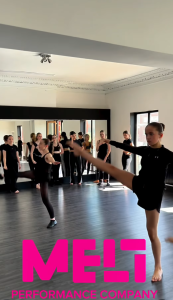
Starting again has forced changes beyond geography too. Running a building on top of everything else proved impossible for one person, so MELT widened its directorship from one to four, sharing decisions that used to sit with Karl alone. It has also opened up space that Liverpool’s crowded arts scene couldn't offer: less competition, the only Level 3 dance/ musical theatre college in the area – and the beginnings of what he calls a ‘golden triangle’ with neighbouring STOs Make and Future Yard.
Next MELT is launching its Arts Hub – a year-round curriculum of free seminars, networking events and masterclasses for emerging artists who’ve potentially spent £70,000 on training, yet have nowhere to learn the business side of a creative career. A sensory space is helping children with SEND needs build up to full three-hour sessions.
Numbers are climbing again – in little over six months, 37 children have enrolled and the academy’s gifted talent programme still draws families from Manchester, Nottingham, Kendall and Wrexham – four of them already on stage in the West End.
None of this would have been possible without a fixed, affordable home – or without an investor willing to back a model that makes it viable. “Social investment always feels like a leap, but we’ve never relied on grants anyway – we’ve always run programmes where we’re making money. Kindred has championed me ever since,” he says. It’s a measured kind of optimism, but a real one. “Despite everything, over here we can breathe,” adds Karl. "We've done the hard work, and I'm starting to see that snowball."