
Some money. Some people. (Not enough of either.)
What happens when you give a room full of people some money, a handful of resources and ask them to build an economy? At this year's FLIPIM gathering, we invited attendees into a breakout session to find out.
How to Build an Economy is something we've thought about a lot over the years, and for FLIPIM we turned it into a participatory experiment exploring how economies emerge, how people make decisions within them and what happens when resources, opportunities and power are distributed unequally.
The idea was simple. Everyone received a role, a set of personal circumstances and – depending on their luck – some money. Some started with considerable wealth and others had nothing. Some had caring responsibilities or unpaid work to undertake. Everyone had to work out how to get by.
Around the room were opportunities to build businesses and services: a bakery, community shop, childcare provision, an energy company, a makerspace and even a casino (a last-minute addition). Participants could pool resources, invest, find employment, collaborate or attempt to change the rules (although there weren't many rules to begin with).
There was no planned outcome. The economy was whatever the people in the room made of it. And, as we thought, things got interesting. Sweet beautiful chaos.
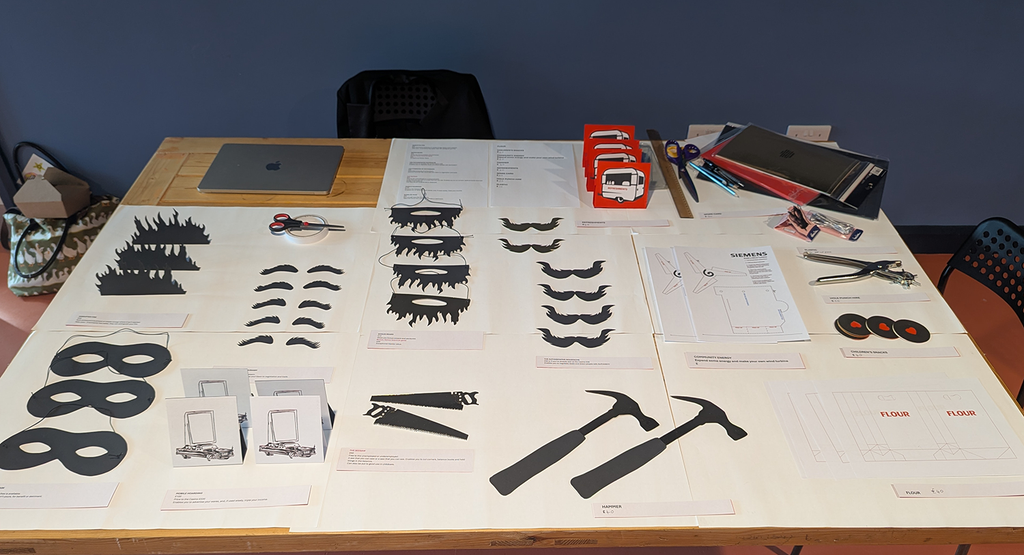
The room funded childcare, a community shop and community energy. Other businesses struggled to get noticed at all. People made decisions based on what was immediately in front of them. Those without money had to navigate an economy taking shape around them.
Some highlights:
- The fella who started with £1,000 ended with £400
- Someone who started with no money ended with some
- Someone decided to start a bakery with one minute to go
- Someone told me it wasn't for them and gave me their money back
- Nobody funded the casino
The experiment raised questions about things we don't always notice. Who gets to participate? Who decides what gets built? What work goes unpaid? And how might an economy develop differently if people had more time or the opportunity to change its rules?
We learned plenty about the experiment itself, too. It definitely needs more time, more people and room for unexpected things to develop. A business might create demand for childcare. Someone making a wind turbine might decide to start their own enterprise. Two organisations might discover that collaboration serves them better than competition.
Maybe we'll see some of that in the next edition of the game.
For Kindred, the experiment is part of a wider curiosity about how we make economic ideas tangible, accessible and open to challenge. Because economies aren't just things that happen to us – they're things we make together.