
Standing firm: property, the social economy and the case for community ownership
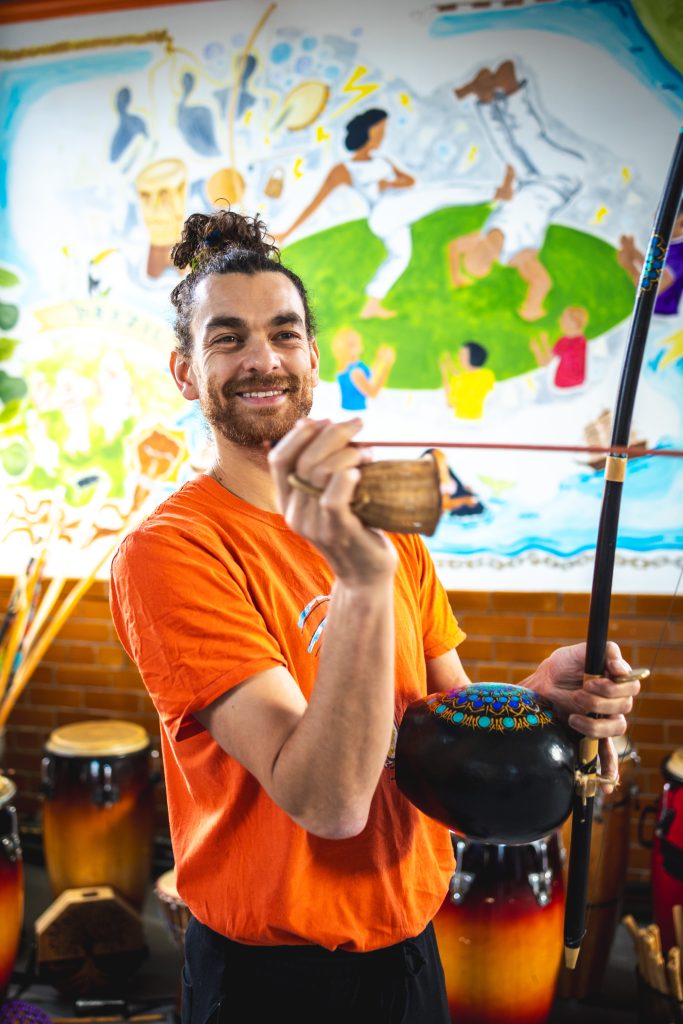
“I knew I wanted to combine education, capoeira and creativity, bringing capoeira to as many people as possible and drawing on its potential to reach different people in different ways,” says Capoeira for All CIC founder Akil Morgan.
Established in 2015, the organisation runs powerful community projects and educational programmes, using capoeira to bring curriculum themes to life in the classroom. It has run a project with UNICEF teaching the United Nations Convention on the Rights of the Child through capoeira, and a programme designed to explore the refugee experience with Sanctuary Schools. By 2025 that education programme needed investment to focus it, building a stronger trading income with investment from Kindred. “Kindred’s given us great support,” Akil says. ”We’ve got investment, we’ve got space – and from this we’re building opportunities.”
For several years, Capoeira for All moved from space to space across Liverpool. An office here and a rented hall there; classes running from Belvidere Academy, then Hope University – before it found a home at Liverpool 8’s John Archer Hall. But every move meant upheaval and Akil is clear about the change a permanent home created. “I don’t think there’s any business that wouldn’t say that a secure tenure and a reliable affordable place to run your business from is the bedrock of being able to do what you do and grow what you do,” he says.

For a social business built around people and practice, rather than a product, that base matters even more – it’s the difference between being able to plan a term and planning a decade. Security of tenure did something else for Capoeira for All too: it gave Akil and his team permission to shape the space around its own needs. “I’m actually able to affect the space,” Akil says. “I’m able to rip out this sink, build this mirror wall into the wall – we’re able to make it what it needs to be for our community.” That kind of investment only makes sense when you know you’re not leaving.
Community ownership
But Capoeira for All didn’t just find a secure space for its tenancy – it ended up becoming one of a group of tenant landlords, managing the building it worked from.
Toxteth TV and John Archer Hall were heading towards crisis. The board and staff couldn’t keep the buildings maintained and tenants had started to lose confidence. Rather than watch the doors close, a group of long-standing tenants organised and, at an AGM, passed a resolution with two effects – the board became tenant-led and every tenant with a valid lease became a member of the company. The new tenant-led board pledged to represent the businesses across the building – Akil says: “there’s no reason that the tenants shouldn’t be the one making decisions about how this space moved forward,” he says. “We’re the people who make these builds come alive and we’re heavily invested in them.”
Originally, the building was bought with EU Objective One funding, which built in an asset lock to make sure that whoever sat on the board could never simply sell it off. In other words, it was designed as a community asset from the start. What changed in 2024 was who actually held the decision-making power.
That change took a huge amount of energy and 18 months before tenants felt its positive impacts in their everyday working life. Raising rents to sustainable levels meant asking long-standing tenants to sign new leases and rebuild trust from real resistance that had built up amongst tenants. “People were still used to their old culture,” admits Akil. “It’s hard to image change, until you see and feel things are done differently. We’ve been making these changes the last two years.” The first year of the new board was, in his own words, “a hell of a first year” – tough enough that Akil considered walking away at one point. But two years on, John Archer Hall has come through that period and looking ahead, rather than firefighting.
The space now
The payoff is visible in how the building is used day to day, with classes running six days a week, a space for Ubuntu, a Black wellbeing collective, alongside other community organisations and meetings. It’s shared infrastructure for a wider community, not just headquarters for the organisations that are based there. Akil believes Toxteth TV may be one of very few, if not the only, community-run TV studios in the city, though it still needs an estimated £150,000 of investment to modernise the studio equipment, on top of wider repairs and energy efficiency work on an ageing building.
Other community organisations are already asking Akil and his co-directors about their experience and John Archer Hall is now investigating a cooperative model, with support from Kitty’s Laundrette and recent funding to take this forward. Links with the University of Central London brought a cohort from across the country to visit the space and Akil and his neighbours at the African Caribbean Centre and Kuumba Imani have since joined that cohort themselves, taking their own story to its next meet-up in a community space in Tottenham to share learning and support.
Akil frames this not just as a governance issue, but an equity issue. He points to Liverpool City Council needing to do more to move assets into community hands and for the city to reimagine itself, so the benefits of tourism and business wealth reach the Black and Global Majority communities. For Capoeira for All, a say in the building’s running isn’t the end of that argument, but the proof that the argument works.