
Published 14 April 2026.
Peer-led innovation clusters are emerging as a defining characteristic of the social economy –places where socially-trading organisations work together and collaborate; where their collective activity becomes more than the sum of its parts.
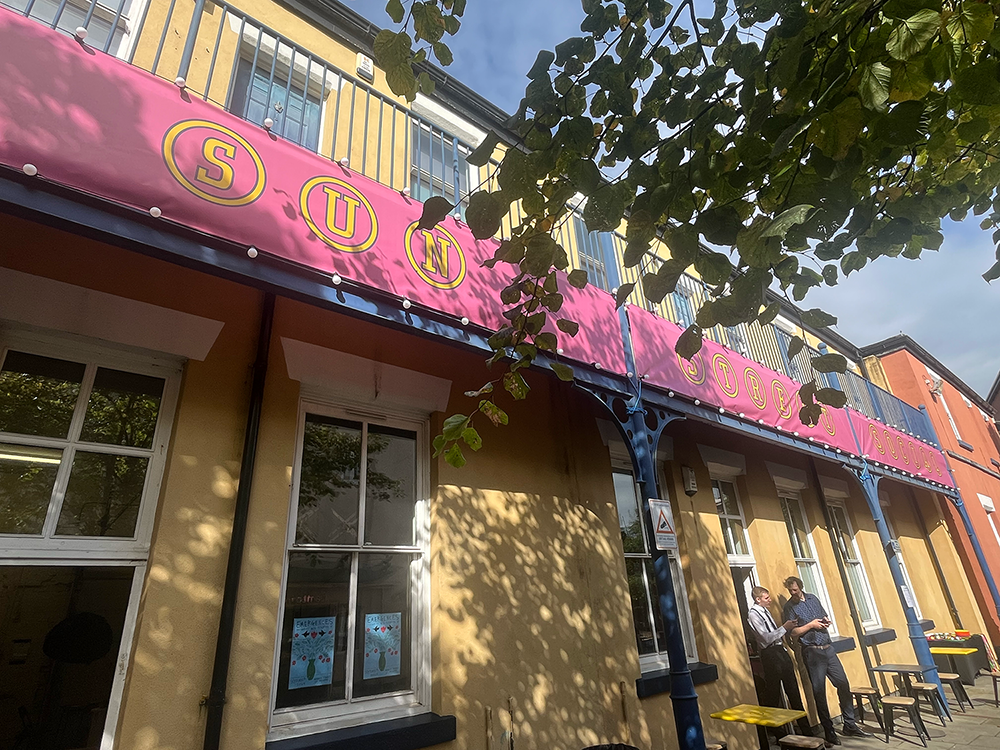
Street and a Half (SnA) is a social innovation cluster in the heart of St Helens town centre – home to 16 creative and social businesses, all with ambitions to grow. Developed together by St Helens Borough Council and Kindred, it offers office space, shops and shared areas for hire, bringing together artists, makers and socially-trading organisations under one roof.
But what does ‘socially-trading’ actually mean? In short: businesses that earn their money commercially, but exist for a reason beyond profit – to create social impact. That might be a cooperative, a community-owned venture, or a small enterprise whose entire purpose is to make things better for the people around it. The social economy is made up of organisations like these – and it matters more than most people realise.
Socially-trading organisations (STOs) tend to start the same way. Someone sees a problem, or spots an opportunity, in the place they know and love. They want to do something about it – for themselves, for their family, for their community. If enough people want what they're offering, and are willing to pay for it, a business begins. It really is that straightforward.
What makes these businesses different is where their energy goes. Rather than extracting value from a place, they pour it back in. They tackle health inequalities, open up access to opportunity, support early years, or take on climate risk – all through models that are built to last. They create local jobs, generate local wealth, and give places a character that no outside investor can manufacture.
This matters especially in places like St Helens, where traditional economics – the idea that wealth created at the top eventually reaches everyone else – hasn’t always delivered. The social economy exists, in part, because mainstream systems leave gaps. And the people best placed to fill those gaps are the ones who live with them every day.
St Helens Borough Council recognised this when it launched its inclusive growth strategy in 2023. That strategy puts social value at the centre of how the town develops – not as an afterthought, but as the whole point. Regeneration here is designed to benefit the people who already live in St Helens: creating local employment, supporting apprenticeships, paying the Real Living Wage, and keeping spend local wherever possible.
Inclusive growth, though, isn’t only about cranes on the skyline or new buildings going up, it’s about the people who already call St Helens home. Their drive, their creativity, their knowledge of what their community needs. And Street and a Half is a physical expression of that belief. The building opened for tenants in September 2025. By December, it was full.
The businesses now based there – alongside established local favourites Book Stop, Momo's and Café Laziz – represent a new chapter for the town. Organisations like Artist-led St Helens, Knotura and Angela Wilkinson Photography are evidence that St Helens residents are ready: to try new things, to build their own businesses, to employ people they know, and to make a difference in the communities they understand from the inside.
Councillor Kate Groucutt, the council’s lead for Business and Inclusive Growth, says: “Kindred does fantastic work across the Liverpool City Region in supporting social businesses that not only provide vital services for the communities they’re based in but also giving something back to them too. This fits in perfectly with our Inclusive Growth Strategy and our ambitions for St Helens town centre, where the local community, local residents and local businesses are at the heart of our plans for a thriving, family friendly, welcoming place for people to work and collaborate.
“As regeneration works continue in the town centre, we are aware of the impact for businesses in this area and are working with construction partners to minimise disruption as much as possible, and to remind residents and visitors that businesses remain open and ready to welcome them. It’s fantastic seeing this building now at full occupancy and alongside wider private sector investment we’re seeing the start of a really exciting and creative, socially trading hub emerging in the George Street Quarter which I hope to see continue to grow in the coming years.”
There’s something else worth understanding about clusters. When STOs work near each other – in the same street, the same building, the same neighbourhood – things accelerate. They share ideas, spot connections, and generate innovation at a rate that isolated organisations rarely match. That’s why the cluster model works: proximity creates momentum.
Consultant Mark Lawler leads on property for Kindred. He says: “Social innovation thrives on collaboration, serendipity and shared resources. By securing property, the social economy creates "anchors" in communities. These sites – community hubs, shared workspaces, or refurbished derelict spaces – provide the secure, long-term premises needed for socially-trading organisations to experiment and scale. Unlike traditional commercial real estate, these spaces prioritise social value over maximum financial rent, allowing startups, creatives and social entrepreneurs to operate without the burden of high costs. This stability enables STOs to focus on addressing local needs.”