STOs are high growth and the drivers of a more inclusive economy.
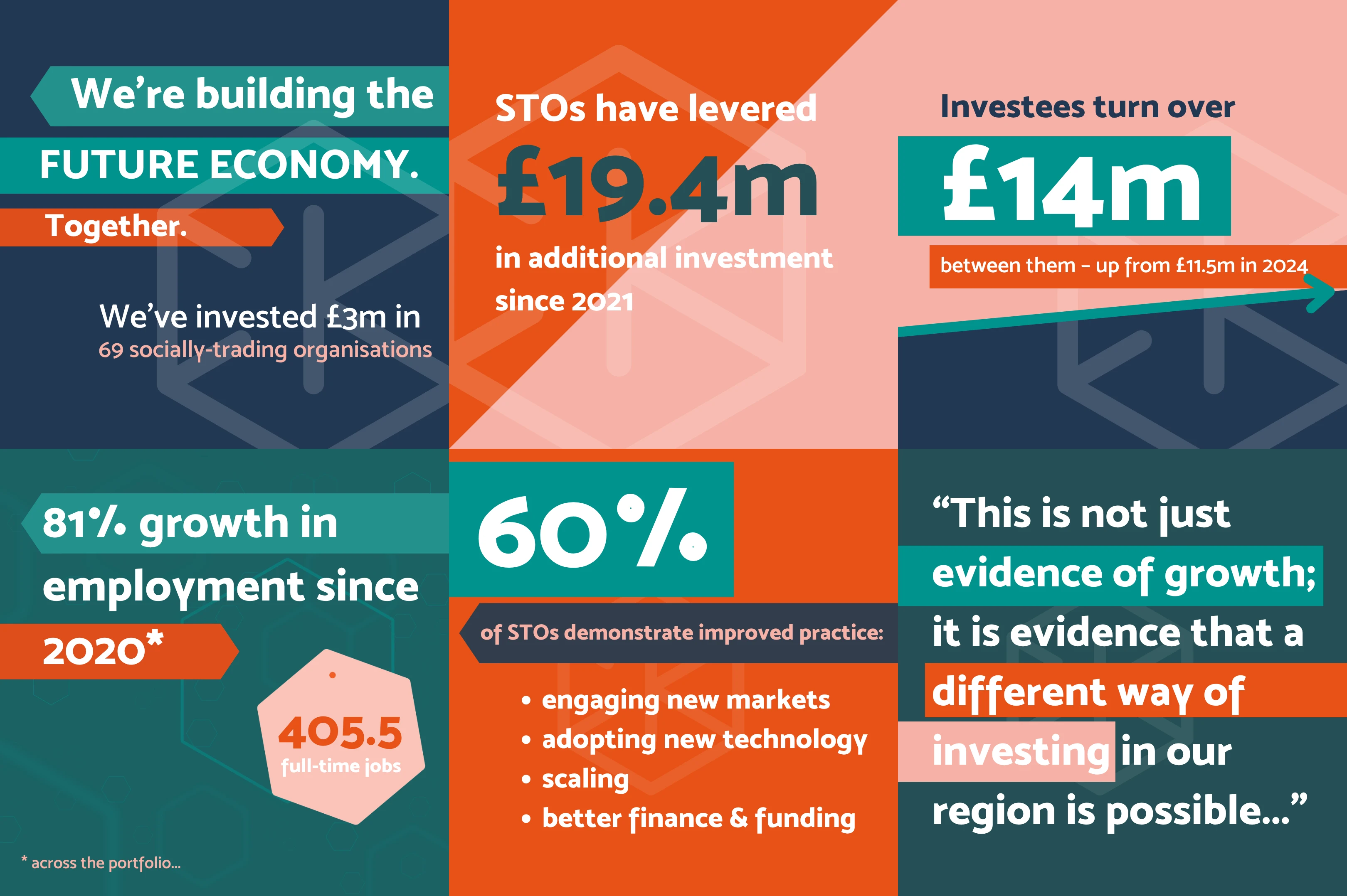
Investing in local communities creates clusters of social innovation and peer-led support that show all the signs of industry sector clusters in terms of accelerated growth, innovation and impact.
The UK’s current regeneration model and spend is trickle down – pretty much everyone agrees it doesn’t work. Our work offers one alternative.
We advocate for the devolution of money and decentralisation of decision making. Decisions about money – and where it’s spent – should take place in regional and local communities, driven by local insights and lived experience.
We produce an impact report every year, which shows the impact of STOs across Liverpool City Region. You can read them here:
Our most recent impact report demonstrates how and why social economy jobs matter and how the social economy is catalytic by nature, attracting follow-on investment.
Our 2024 impact report paints a picture of how social investment is powering real change across the Liverpool City Region, with a thriving and inclusive social economy that’s making a real difference.
Our 2023 impact report highlights how the 44 socially trading organisations we invested in by 2023 had created 49 new jobs that year, boosted turnover by 77% since 2021 and brought in £14m of extra funding. Almost half of our investment goes to women-led organisations and a quarter to Black-led social businesses, all helping build a fairer Liverpool City Region.
Kindred is a member-led collaborative network of socially-trading organisations (STOs) in Liverpool City Region. Firmly rooted in our communities, we are driven by purpose and passion. 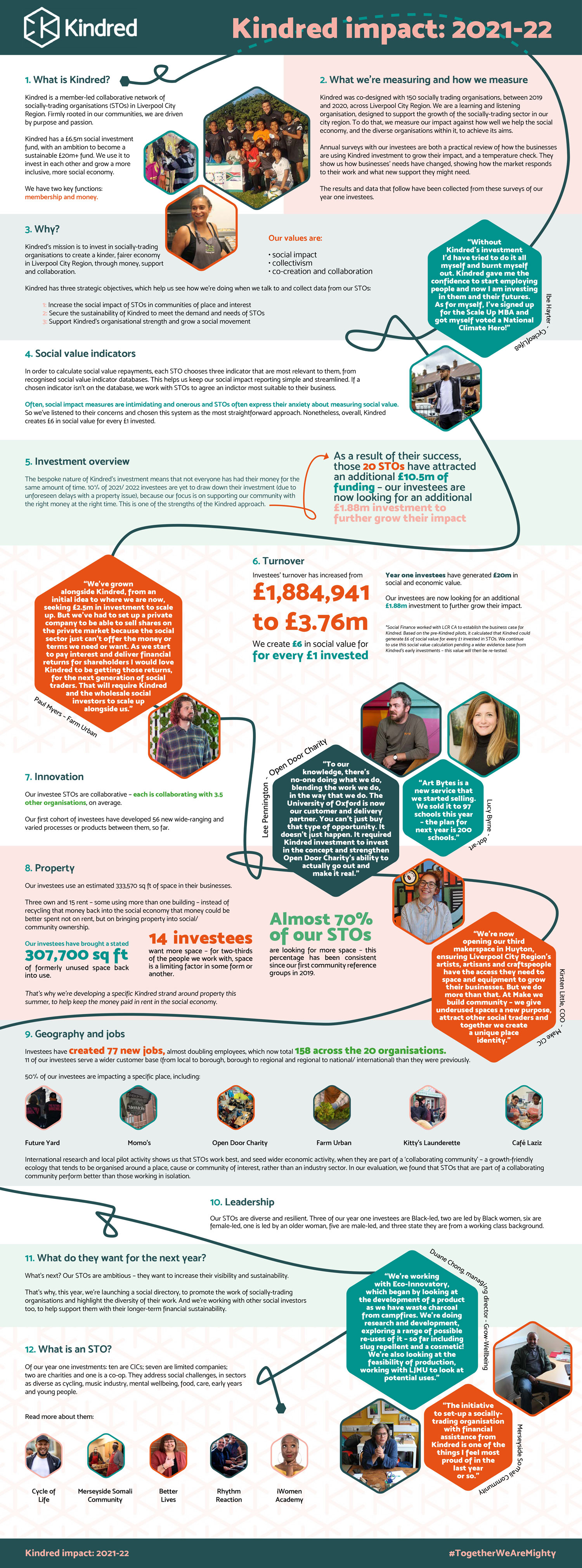
What if ideas for our economy were prompted by a community of STOs, that value cooperation and collaboration?
This evaluation reports the findings of a pilot peer support programme, which was informed by 13 Black and Ethnically Diverse socially-trading organisations within the Liverpool City Region.
BlaST, established in 2020, is a collaborating community of 50+ business leaders with Black lived experience in the Liverpool City Region.
Do young people have the same chances with work (employment) as their predecessors? Is there space for their ideas to be staged, to grow and be shared? Do they have opportunities which offer freedom for risk taking, to explore, make mistakes, to find others with whom to collaborate and build communities? Are they more concerned with social value within what they do as work? Are there alternative possibilities for the future of work?
